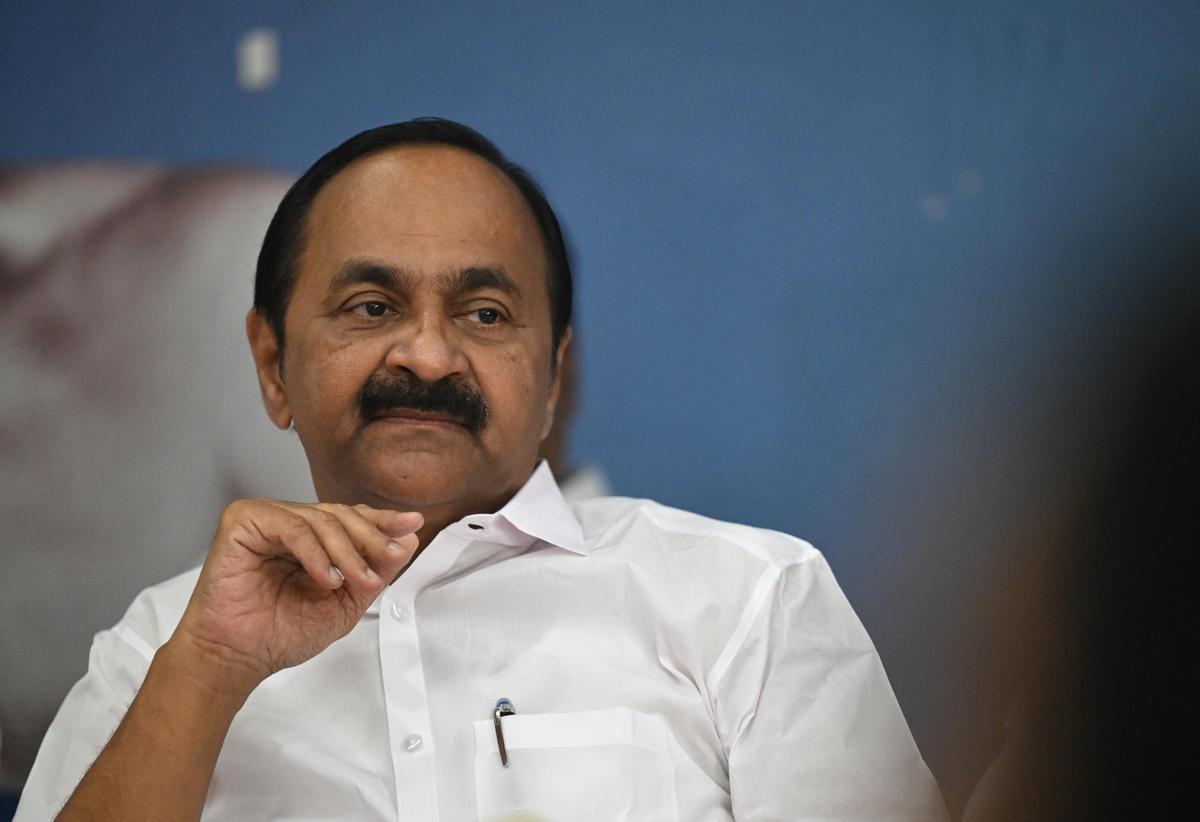
The swearing-in of V. D. Satheesan as the 13th Chief Minister of Kerala on May 18, 2026, marks an extraordinary inflection point in the modern history of the state. Leading the Congress-led United Democratic Front (UDF) to a landslide victory—capturing 102 out of 140 seats—Satheesan has effectively dismantled a decade of Left Democratic Front (LDF) hegemony under Pinarayi Vijayan.
This dramatic shift is not merely a routine alternation of power typical of Kerala’s historic pendulum politics; it represents a profound realignment of the state's socio-political psyche. As the new administration settles into Thiruvananthapuram, analyzing the foundational interplay of Kerala’s unique culture, the evolution of the public mindset, the ideological resilience of the Congress party, and the distinct governance blueprint introduced by Chief Minister Satheesan becomes essential.
The Socio-Cultural and Political Tapestry of Kerala
To comprehend the magnitude of the 2026 mandate, one must first grasp the foundational bedrock of Kerala's society. Historically characterized by high literacy, profound political consciousness, and a robust public sphere, Kerala operates as a highly vocal and demanding democracy. The state’s social fabric is intricately woven from a diverse demographic mix, consisting of substantial Hindu, Muslim, and Christian populations.
Unlike many other regions in the Indian subcontinent where identity politics leads to social fracturing, Kerala has historically managed these dynamics through a shared secular consciousness. This is deeply rooted in the 19th and 20th-century social renaissance movements led by reformers like Sree Narayana Guru, Ayyankali, and Chattampi Swamikal. These movements laid the groundwork for universal education, egalitarian values, and a fierce resistance to caste-based oppression. Consequently, politics in Kerala is treated not as a passive, five-year ritual, but as a continuous, everyday civic engagement.
From Ideological Dogma to Pragmatism
For decades, the Malayali voter was perceived as highly institutionalized, strictly divided into committed party blocks belonging to either the Left or the Right. However, the 2026 election results underscore a monumental shift in the collective psyche of the state’s electorate. Today’s voter in Kerala is increasingly pragmatic, globally exposed, and uncompromising when it comes to administrative transparency.
While the state has long prided itself on its ‘Kerala Model’ of development—celebrated for top-tier healthcare, human development indices, and social welfare—the contemporary public mindset has grown weary of systemic stagnation. In the twentieth century, popular participation was largely defined by a rigid adherence to the two main political fronts and a heavy reliance on traditional community or caste organizations. The focus was heavily centered on basic social welfare and the redistribution of wealth.
In the mid-2020s, this outlook has fundamentally transformed. The electorate now demonstrates an acute awareness of anti-incumbency and shows a distinct preference for issue-based voting over blind party loyalty. The modern Malayali voter has increasingly rejected identity-based polarization, demanding high-tech job creation, industrial growth, and absolute administrative clarity instead.
The youth, in particular, are grappling with the realities of educated unemployment and the compulsion to migrate abroad for viable career opportunities. The 2026 verdict reflects a clear rejection of perceived institutional arrogance, corruption allegations, and fiscal mismanagement that clouded the latter half of the previous administration. The modern voter has shown a willingness to penalize governance failures, prioritizing economic revitalization and accountability over historical or ideological commitments.
Resilience, Reconstitution, and the Secular Ideology
The revival of the Indian National Congress in Kerala is a testament to the party's structural resilience and deep-seated connection to the state's democratic ethos. For a decade, critics questioned whether the Congress-led UDF could withstand the aggressive, cadre-based machinery of the CPI(M). The answer delivered by the 2026 mandate is a resounding affirmation of the party's indispensable role in Kerala’s political ecosystem.
At the core of Congress’s appeal in the state is its historic commitment to the dual pillars of Indian statehood: constitutional democracy and secularism. In an era where national discourse is frequently strained by communal polarization, the Congress in Kerala has positioned itself as the genuine, inclusive custodian of pluralism.
The party’s secular ideology in the state operates on a model of mutual respect and representation, ensuring that minority apprehensions are addressed without alienating the majority communities. By maintaining a steady middle ground, Congress successfully defended the state's secular fabric against external attempts at communal division, proving that its pluralistic vision remains highly relevant to the collective conscience of Kerala.
The Architect of the Comeback: Who is V. D. Satheesan?
No analysis of this political transition is complete without examining the journey of the man at its center. V. D. Satheesan, a six-time MLA representing the Paravur constituency since 2001, is a lawyer by training and a seasoned politician who rose steadily through the ranks of the Kerala Students Union (KSU) and Youth Congress.
When Satheesan was appointed as the Leader of the Opposition following the UDF’s defeat in 2021, he inherited a demoralized, faction-ridden state unit. Over the next five years, however, he transformed his role into a formidable center of gravity. Known for his articulate, highly researched parliamentary interventions and an uncompromising stance against corruption, Satheesan systematically dismantled the government's defenses on the floor of the Assembly.
His political persona is a unique combination of intellectual depth, media savvy, and grassroots connect. Crucially, Satheesan represents a definitive departure from old-guard Congress politics, demonstrating a deliberate reluctance to cater to the dictates of powerful caste and communal pressure groups, choosing instead to appeal directly to the universal citizen.
The Generational Shift and Constitutional Commitment
Satheesan’s ascension to the Chief Minister’s office represents a historic generational shift within the Congress party and Kerala politics at large. For decades, the state's political landscape was dominated by octogenarian leaders and deeply entrenched factional loyalties. The 2026 cabinet reflects a conscious breaking of this mold: out of the 21 ministers sworn into office, 14 are fresh faces.
This introduction of younger, reform-oriented, and professionally qualified legislators signals an intentional effort to future-proof the state’s leadership. Furthermore, this new guard brings a modernized commitment to democracy. Rather than treating secularism and democratic governance as mere slogans, Satheesan’s political rhetoric centers on strengthening democratic institutions, ensuring judicial and administrative autonomy, and encouraging participatory policymaking that actively engages civil society.
Shifting Priorities and New Policy Directions
With the UDF assuming governance, a tangible shift in style, substance, and execution is expected across the state's administrative apparatus.
A Departure from Centralized Command
The first major change lies in the democratization of governance. The previous administration was frequently criticized for a highly centralized, CMO-driven decision-making process. Satheesan is expected to return to a classic cabinet-style system, empowering individual ministers and restoring administrative autonomy to state departments.
Fiscal Rationalization and Pragmatic Economics
Facing structural fiscal stress, the Satheesan government is likely to pivot away from high-debt, cosmetic infrastructure projects toward sustainable, revenue-generating economic policies. By retaining key portfolios like Finance, the Chief Minister signals a focus on addressing public debt while simultaneously creating an environment conducive to private investment, digital enterprise, and ecological tourism.
Eradication of Factionalism and Institutional Overreach
The new administration faces the vital task of restoring public confidence in state institutions. Satheesan has pledged a zero-tolerance policy toward corruption and political nepotism. A visible scaling back of political interference in cooperative banks, universities, and local bodies is expected, directly addressing the core grievances that drove voters away from the previous government.
Challenges and the Road Ahead
Despite a decisive legislative majority, the road ahead for Chief Minister V. D. Satheesan is filled with complex challenges. He must navigate the delicate internal dynamics of a multi-party coalition, balancing the aspirations of key allies like the Indian Union Muslim League (IUML) and various Kerala Congress factions while maintaining his image as an independent leader answerable only to the public.
Furthermore, the state's financial constraints leave little room for populist errors. Satheesan will need to balance necessary fiscal discipline with the preservation of Kerala’s vital social safety nets.
Ultimately, the 2026 mandate is not a blank check; it is a contract for transparent, progressive, and dignified governance. If V. D. Satheesan can successfully translate his widely praised performance as Opposition Leader into cohesive executive action, his administration will do more than just write a new chapter for the Congress party—it will set a transformative benchmark for developmental politics across the country.
Sudhir S. Raval is Consulting Editor at the ITV Network
