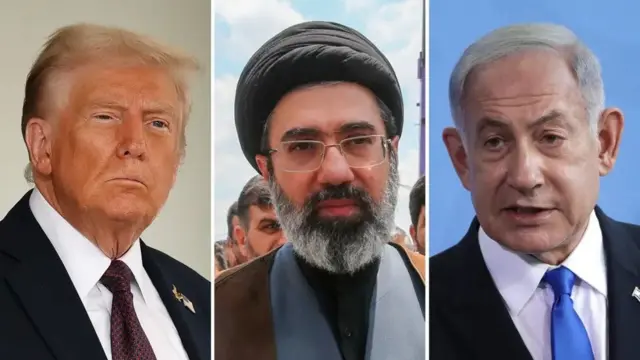
In the corridors of power in Washington, Jerusalem, and Tehran, the rhetoric of ‘strategic triumph’ remains the official currency. Military briefings emphasize neutralized targets, and state media broadcasts images of resilient populaces. Yet, as the conflict between the United States, Israel, and Iran enters a sustained, agonizing phase in 2026, a cold analytical truth emerges: the traditional metrics of victory have been replaced by a ledger of shared depletion. This is no longer a war of conquest or regime change; it is an architecture of attrition where every ‘success’ on the battlefield accelerates a structural decline at home. When the dust settles on this triangular struggle, history will likely record that there were no victors—only nations that lost varying degrees of their future.
The Domestic Hollow: Crises of Internal Stability
The most profound casualty of this conflict is not found on a map, but within the social fabric of the combatants themselves. The ‘internal front’ has become the most vulnerable flank for all three powers.
In the United States, the war has acted as a high-velocity wedge, deepening a polarization that was already at historic levels. With the 2026 midterm elections looming, the ‘Middle East entanglement’ has become a toxic political liability. For the first time in decades, a ‘bipartisan consensus’ on foreign policy has vanished. The administration faces a populist revolt from both the left, which decries the humanitarian cost, and the right, which demands an ‘America First’ withdrawal from costly foreign subsidies. This internal schism limits Washington’s ability to project a coherent long-term strategy, making its global commitments appear brittle and subject to the whims of the next election cycle.
Israel finds itself in an even more precarious domestic state. The war initially provided a veneer of national unity, but that mask has slipped. The fundamental disagreements over the nation’s identity—the rift between secular-liberal Israelis and the ultra-nationalist religious right—have only been exacerbated by the pressures of a ‘forever war.’ The social contract, based on the promise of absolute security in exchange for mandatory service, is under extreme duress. As the conflict drags on, the internal debate over ‘war aims’ versus ‘hostage recovery’ has turned into a broader crisis of faith in the political leadership, threatening the very democratic foundations the state prides itself on.
For Iran, the crisis is existential. The regime’s survival has historically depended on its ability to project strength while managing a ‘resistance economy.’ However, the cumulative weight of targeted strikes and internal dissent has pushed the state toward a legitimacy cliff. The younger generation, having known nothing but sanctions and social restriction, increasingly views the regional ‘shadow war’ as a theft of their prosperity. The state's reliance on the IRGC to maintain order through force has hollowed out its revolutionary credentials, leaving a government that rules by fear rather than by mandate.
Defense and Deterrence: The Myth of the Iron Shield
For half a century, ‘deterrence’ was the cornerstone of Middle Eastern security. That concept is now a relic. This conflict has proven that high-tech precision can be overwhelmed by low-tech mass.
Israel’s vaunted defense systems, while technically masterful, have faced a ‘cost-per-intercept’ crisis. Spending millions of dollars to down a swarm of $20,000 drones is an unsustainable defensive posture. The myth of an impenetrable ‘iron shield’ has been replaced by the reality of a ‘leaky sieve,’ forcing the Israeli public to live in a state of permanent anxiety.
Simultaneously, the United States has seen its global military bandwidth stretched to the breaking point. By being forced to maintain a massive carrier presence and advanced missile batteries in the region, Washington has effectively ceded ‘strategic space’ in the Indo-Pacific. The Pentagon’s inability to focus on its primary long-term competitor, China, is a massive strategic loss that will echo for decades. Iran, too, has seen its ‘strategic depth’—the network of regional proxies—degraded to the point of irrelevance. Its ‘ring of fire’ has been singed, leaving Tehran more vulnerable to conventional attack than at any point since the 1980s.
Economic Attrition: The Price of a Stalemate
The financial toll is not merely a budgetary line item; it is a generational theft.
Israel, once the ‘Start-up Nation,’ is seeing its economic engine stall. The tech sector, which accounts for nearly 20% of GDP, relies on international mobility and a stable reserve of young talent. With tens of thousands of developers in uniform and foreign venture capital fleeing the instability, the long-term growth trajectory of the country has been flattened. The cost of reconstruction and the skyrocketing national debt are forcing austerity measures that will degrade social services for years to come.
In Iran, the economy has shifted from ‘resistance’ to ‘collapse.’ The total isolation from global financial markets, combined with the destruction of energy infrastructure, has induced hyperinflation that has obliterated the middle class. The ‘war economy’ has funneled what little wealth remains into the military apparatus, leaving the civilian population to scavenge for basic goods.
Even the United States faces a subtle but real economic attrition. The multi-billion dollaraid packages, combined with the inflationary impact of disrupted global energy and shipping lanes, have added significant pressure to a domestic economy already struggling with debt. The ‘opportunity cost’ is the real loss: billions spent on munitions in the desert are billions not spent on the American workforce or infrastructure.
Geopolitics and the Multipolar Shift
The conflict has accelerated a transition toward a world where the U.S. is no longer the sole arbiter of order. The U.S. is losing its grip on the ‘Global South.’ Nations across Asia, Africa, and Latin America increasingly view Washington’s Middle East policy as a destabilizing force that prioritizes narrow regional interests over global stability. This has created a vacuum that China and Russia have been happy to fill, presenting themselves as ‘sober’ alternatives to Western ‘chaos.’
Israel, meanwhile, finds itself more diplomatically isolated than at any time in its history. The Abraham Accords, which promised a new era of Arab-Israeli integration, are on life support, forced into the background by the visceral imagery of the war. Tehran, despite its tactical resilience, remains a pariah state, unable to convert its ‘resistance’ into meaningful regional leadership. The result is a fragmented Middle East where no one is in charge, and everyone is at risk.
Credibility and Credentials: The Moral Deficit
In the modern era, a nation’s ‘credentials’—its perceived moral standing—are a form of strategic power. On this front, the losses are near-total. The United States has seen its self-proclaimed role as the guardian of the ‘rules-based international order’ severely compromised. The perceived double standards in the application of international law have turned its moral appeals into punchlines for its adversaries. Israel is currently embroiled in a multi-generational reputational crisis, with its actions being scrutinized in the world’s highest courts, affecting its ‘brand’ in a way that will take decades to repair. Iran, despite its rhetoric of ‘supporting the oppressed,’ has been exposed as a state that prioritizes ideological expansion over the lives of its own citizens and regional allies. When the war of narratives is lost, the war of missiles becomes a hollow pursuit.
The Stolen Future: A Generational Liability
The most profound loss is the one being forced upon the youth of 2026. In Israel and Iran, a generation is being raised in a climate of existential fear and radicalization. The ‘brain drain’—the exodus of the most educated and globalized citizens seeking a peaceful life elsewhere—is robbing both nations of the human capital they need to survive the 21st century. In the United States, the younger generation’s growing cynicism toward foreign intervention is creating a new wave of ‘strategic isolationism.’ We are not just losing resources; we are losing the next generation of diplomats, innovators, and leaders who can imagine a world beyond the cycle of violence.
The Fallacy of the Last Man Standing
The ‘status’ of the US-Israel-Iran war in 2026 is a ledger of shared ruin. The military strikes may be precise, but the fallout—economic, social, and diplomatic—is indiscriminate.
For the United States, the loss is one of global focus and domestic consensus. For Israel, it is a loss of security and international standing. For Iran, it is the exhaustion of its legitimacy and its people. True journalistic integrity requires us to look past the ‘tactical victories’ reported in daily briefings and acknowledge the broader strategic defeat being suffered by all. In this war, the ‘last man standing’ is not a hero, but a victim of his own inability to imagine a world beyond the zero-sum horizon.
Sudhir S. Raval is Consulting Editor at the ITV Network
