The geopolitical and economic landscape of the 21st century is increasingly defined by resource diplomacy, climate adaptation, and cross-border technology transfers. Prime Minister Narendra Modi’s official visit to the Netherlands on May 16–17, 2026, marks a watershed moment in this paradigm. Invited by Dutch Prime Minister Rob Jetten, the Indian leader’s engagement in The Hague went far beyond routine diplomatic protocols. Amidst shifting global dynamics, the two nations formally elevated their bilateral relations to a ‘Strategic Partnership.’
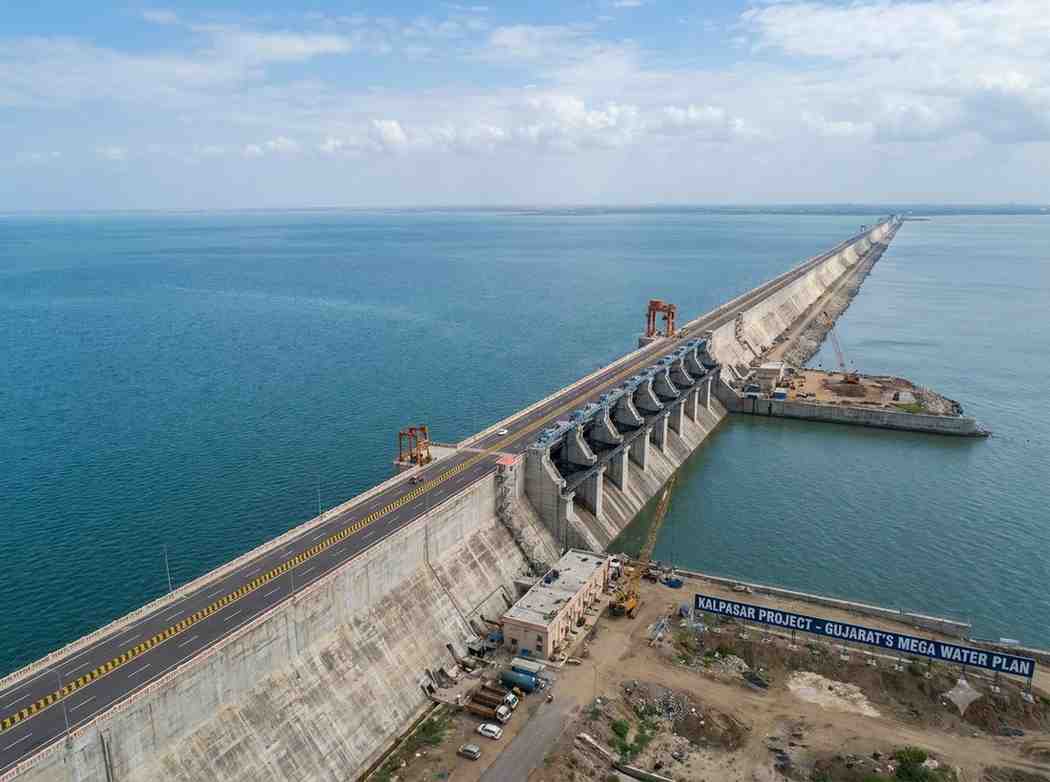
While the visit yielded sweeping agreements on semiconductors, artificial intelligence, and maritime security, its most profound domestic impact for India lies in the domain of hydraulic engineering. By bridging Dutch maritime mastery with Indian infrastructural scale, the visit has breathed fresh life into one of India’s most ambitious, yet long-delayed, mega-engineering blueprints: Gujarat’s Kalpasar Yojana. Through a newly inked Letter of Intent (LoI) for technical cooperation, a vision conceptualized decades ago is finally transitioning from a bureaucratic stalemate into an actionable reality.
Redefining Bilateral Dynamics
The elevation of India-Netherlands relations to a Strategic Partnership reflects growing convergences in economic stability and technological co-innovation. The Netherlands is not only one of India’s top trading partners in Europe but also a critical gateway to the continental market. During high-level delegation talks and an intensive CEO roundtable, Prime Minister Modi positioned India as a stable, cost-effective manufacturing hub, citing next-generation reforms in governance, taxation, and labor codes.
The outcomes of the summit were multi-dimensional, spanning a comprehensive Security and Defence Partnership and the Dutch decision to join the Indo-Pacific Oceans Initiative (IPOI). However, the centerpiece of the bilateral roadmap was sustainability and water management. The historical ties between the two nations, underscored by a shared vulnerability to climate-induced water crises, found their ultimate expression during a joint visit by both Prime Ministers to the iconic Afsluitdijk—the legendary 32-kilometer-long Dutch sea dam. The Afsluitdijk (pronounced AHF-slyt-dike) is a monumental 32-kilometer-long (20-mile) sea dam in the Netherlands. Constructed between 1927 and 1932, it is widely considered one of the greatest engineering marvels of the 20th century. This site visit served as the perfect backdrop for addressing India's complex coastal engineering challenges.
The Genesis of Kalpasar Yojana and Decades of Stagnation
To understand the significance of the 2026 Indo-Dutch pact, one must examine the history of the Kalpasar Project (the Gulf of Khambhat Development Project). Initially envisioned in the late 20th century, the project gained official political momentum under the leadership of Gujarat’s then-Chief Minister, Keshubhai Patel. The fundamental core of the Yojana was simple yet revolutionary: construct a massive sea dam across the Gulf of Khambhat to convert a saline marine environment into a colossal freshwater reservoir.
Despite its immense promise to permanently resolve the acute water shortages plaguing the arid regions of Saurashtra and Kutch, the project faced a multi-decade impasse. When Narendra Modi assumed the Chief Ministership of Gujarat in the early 2000s, his administration initiated extensive marine surveys and funded exhaustive feasibility studies. Yet, the project remained gridlocked on the drafting table.
The stagnation was not born out of a lack of political will, but rather the sheer, unprecedented scale of the engineering challenges involved. Closing a high-tidal gulf where seven major river systems—including the Narmada, Mahi, Sabarmati, and Dhadhar—empty into the sea requires navigating extreme hydrodynamic pressures, complex siltation patterns, environmental impact variables, and monumental marine construction requirements that pushed the limits of conventional civil engineering.
Decoding the Blueprint: Socio-Economic Transformations
The revised scope of the Kalpasar Yojana outlines an engineering marvel designed to fundamentally reshape Western India's economy. The project centers on a 30-kilometer sea dam connecting Bhavnagar on the western coast of the gulf to Bharuch on the eastern coast. This barrier will trap an estimated 10 billion cubic meters of freshwater, effectively capturing nearly 25% of Gujarat’s average annual rainwater runoff that otherwise flows wastefully into the sea.
Beyond creating a massive freshwater basin, the dam will support a state-of-the-art, 10-lane transport corridor over its crest. This highway will cut the transit distance between South Gujarat and the Saurashtra peninsula from 240 kilometers to just 60 kilometers, saving millions of liters of fuel annually and revolutionizing regional logistics.
Furthermore, the revised plan integrates a robust clean-energy matrix capable of generating 1,500 MW of wind power and 1,000 MW of solar power. The reliable supply of freshwater will breathe life into agriculture across one million hectares of parched land spanning 42 talukas in nine districts, while simultaneously stimulating local fisheries, encouraging industrial manufacturing zones, and boosting eco-tourism.
The Dutch Catalyst: Leveraging 90 Years of Engineering Mastery
The primary catalyst transforming Kalpasar from a stalled concept into a tangible reality is the introduction of Dutch hydraulic expertise. The Netherlands lives by the adage that while God created the sea, the Dutch made the shore. Nearly a third of the country sits below sea level, protected by an intricate network of dikes, surges, and barriers.
By visiting the Afsluitdijk, Prime Minister Modi directly inspected a structure that completed the exact transformation Kalpasar aims to achieve: blocking the North Sea to turn the saltwater Zuiderzee into the freshwater lake IJsselmeer. Under the newly signed Letter of Intent between India’s Ministry of Jal Shakti and the Netherlands’ Ministry of Infrastructure and Water Management, the Dutch government will share over 90 years of operational, ecological, and structural data from the Afsluitdijk.
Crucially, the collaboration addresses the project's most complex hurdle: the ‘closure methodology.’ Safely dropping the final structural blocks across a roaring marine channel requires highly sophisticated hydraulic engineering. World-renowned Dutch maritime institutes, such as Royal Haskoning, are now working alongside Indian engineers to model tidal flows, mitigate heavy siltation, and deploy advanced eco-friendly dredging techniques that minimize disruption to marine biodiversity.
Domestic and Regional Implications
For India, reviving the Kalpasar Project under an international partnership is a strategic masterstroke. While the landmark Sardar Sarovar Dam on the Narmada River successfully mitigated Gujarat's immediate drought vulnerabilities over the last two decades, relying on a single river system poses long-term ecological and strategic risks. Kalpasar provides vital diversification to India's water security strategy.
By retaining massive volumes of surface water that would otherwise cause coastal flooding or exit into the ocean, the project will naturally recharge depleted groundwater tables across coastal Gujarat. This effectively halts the dangerous march of salinity ingress that has long ruined fertile agricultural tracts along the coastline. Nationally, Kalpasar serves as a pioneering blueprint for coastal reservoir engineering, offering invaluable lessons for other water-stressed maritime states across India facing climate-induced groundwater depletion.
A Legacy Realized
Prime Minister Narendra Modi’s 2026 visit to the Netherlands has successfully bridged the gap between historical vision and futuristic execution. Elevating the bilateral relationship to a Strategic Partnership has yielded far more than diplomatic goodwill; it has unlocked the specialized technical capabilities required to execute one of the most sophisticated marine engineering projects in human history.
By anchoring Dutch expertise to solve the complex hydraulic challenges of the Gulf of Khambhat, the Kalpasar Yojana is no longer an elusive dream inherited from Keshubhai Patel's era. Instead, it stands on the verge of becoming a reality. When completed, this monumental project will stand as an enduring monument to international cooperation, climate resilience, and forward-looking infrastructure engineering—fundamentally securing India's water and economic future for generations to come.
Sudhir S. Raval is Consulting Editor at the ITV Network
