History's ledger is stained by conflicts where fervent, uncompromising religious ideology served not merely as a banner, but as the foundational justification for mass violence. While scholars correctly caution that religion is rarely the sole cause of war—often intertwining with political ambition, ethnic identity, and resource scarcity—certain historical episodes underscore the catastrophic consequences when religious zealotry becomes the central organizing principle of conflict. An examination of these pivotal, devastating events reveals the deep human cost of extremism, a pattern that echoes from the medieval period to the contemporary global landscape. The scale of death and destruction in certain historical conflicts highlights the destructive potential when faith is weaponized.
The Taiping Rebellion (China, 1850–1864)
Often overlooked in Western history, the Taiping Rebellion may be the deadliest civil war in the world, rooted in a uniquely extremist religious ideology. The conflict was led by Hong Xiuquan, who, after reading Christian pamphlets, came to believe he was the younger brother of Jesus Christ. He was driven by this self-proclaimed divine mandate to establish the "Heavenly Kingdom of Great Peace" (Taiping Tianguo) by violently overthrowing the existing Qing Dynasty and its traditional religious practices. The sheer fanaticism and scale of the war fundamentally destabilized the Qing Empire and altered the course of modern Chinese history, resulting in approximately 20 million to 30 million people killed. Some estimates range even higher. The majority of these deaths were attributed to starvation, disease, and the widespread massacres committed by both the Taiping rebels and the Qing forces fighting a total war.
The Thirty Years' War (Europe, 1618–1648)
The Thirty Years' War began over dynastic and territorial disputes but was fundamentally framed and fueled by the bitter sectarian hatred that followed the Protestant Reformation. Fought primarily between Protestant states and the Catholic Holy Roman Empire, the underlying driver was the irreversible religious division of Europe, where fidelity to a specific Christian confession became a matter of political and military survival.
This conflict resulted in staggering casualties, estimated at between 4.5 million to 8 million people. The war was marked by extreme brutality and the reliance on mercenary armies, leading to widespread famine and disease across the German states, which bore the brunt of the fighting. Tragically, some regions lost up to a third of their population. The war finally ended with the Peace of Westphalia (1648), which formally acknowledged the independent sovereignty of states, effectively cementing the principle of religious toleration and ending the period of major European religious wars.
The Crusades (Middle East/Europe, 1095–1291)
The Crusades were a two-century series of military expeditions launched from Western Europe against Muslim control of the Holy Land. These campaigns were launched in response to the call of the Papacy, which promised spiritual salvation (plenary indulgence) to those who participated. This intense religious fervor led to massacres of non-Christians, particularly Jews and Muslims, upon the capture of major cities like Jerusalem.
Estimates of casualties across all major campaigns vary widely, ranging from 1 million to 3 million people. Due to poor record-keeping, the exact toll is difficult to determine, but it includes combat deaths, civilian massacres, and deaths from disease and travel. The legacy of the Crusades is an enduring pattern of distrust and religious antagonism between the Christian West and the Muslim East, with its rhetoric still invoked by extremists today.
The Enduring Pattern: Modern Echoes
The destructive intersection of religious extremism and violence has continued into the modern era, often morphing into non-state, asymmetric warfare.
The Global War on Terror
The rise of groups like ISIS and Al-Qaeda is driven by Salafi-Jihadism, an ideology that uses an extreme, violent interpretation of Islamic texts to wage global Jihad and justify takfir (declaring opponents apostates). This has resulted in tens of thousands of direct terrorism deaths globally since 2001, plus hundreds of thousands of combatant and civilian deaths in associated conflicts in Iraq, Syria, and Afghanistan.
Nigerian Insurgency
The extremist groups Boko Haram and ISWAP aim to establish a caliphate in West Africa and violently reject secularism ("Western education is forbidden"). This conflict has caused over 35,000 direct combat deaths and displaced millions since 2009. The violence frequently targets both Christians and moderate Muslims who do not adhere to the group's specific extremist views.
The Partition of India (1947)
The division of British India was a historical catastrophe where communal religious nationalism (Hindu, Muslim, Sikh) was used to justify ethnic cleansing during the creation of India and Pakistan. The ensuing religious and communal violence is estimated to have killed between 200,000 to 2 million people, accompanying the largest mass migration in human history.
From the sectarian battlefields of 17th-century Europe to the terror networks of the 21st century, these conflicts demonstrate that when religious identity is weaponized and interpreted through an extremist lens, it can unleash unique levels of intolerance, zealotry, and mass slaughter. Understanding the role of this extremism in history is not to diminish other causes, but to recognize the specific potency of an ideology that justifies violence as a divine, uncompromising mandate, thus paving the way for some of the world's most costly human tragedies.
The Spirit of Religion
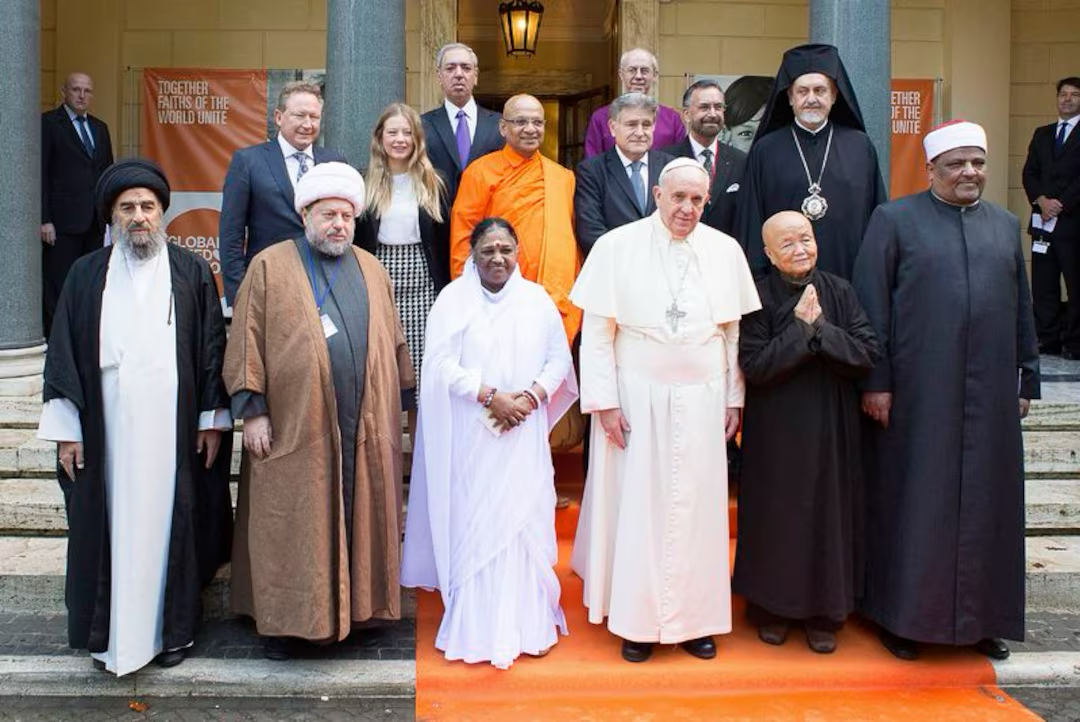
In a world filled with diverse beliefs and religious practices, the essence of religion lies in its inherent values of tolerance, unity, and acceptance. Swami Vivekananda, in his remarkable address at the World's Parliament of Religions in 1893, emphasized the importance of embracing all religions as true and fostering universal toleration. His words resonate deeply in today's world filled with religious diversity and social complexities. Religion, at its core, is not merely a set of beliefs and rituals but a profound realization of a higher power both within and around us. It guides individuals in their quest for spiritual growth, moral development, and connection with a higher reality. Throughout history, various religions such as Hinduism, Islam, Christianity, Buddhism, Sikhism, Jainism, Sufism, Zoroastrianism, Judaism, Baha'ism, and many more have offered unique perspectives on the divine and the purpose of life. While the richness of religious diversity is a testament to the human experience, it also presents challenges. Religious discrimination, hostility, and violence continue to undermine the fundamental principles of peace and coexistence. Governments, societies, and individuals must work together to combat religious intolerance, promote freedom of belief, and ensure equal rights for all individuals, regardless of their faith.
The concept of religious unity, while noble in theory, remains elusive due to the complexity of religious differences and historical conflicts. However, at the heart of all religious traditions lies a common thread of divine inspiration and moral teachings. By recognizing and respecting the similarities and differences among religions, we can foster a spirit of mutual understanding, empathy, and dialogue.
In the face of communal violence, religious terrorism, and global conflicts, it is imperative to address the root causes of religious discrimination and promote peacebuilding efforts. Through education, interfaith dialogue, and advocacy for religious freedom, we can create a more inclusive, harmonious, and compassionate society where individuals of all beliefs can coexist peacefully. The true essence of religion lies in its ability to inspire compassion, kindness, and solidarity among diverse communities. By embracing the values of unity, tolerance, and diversity, we can transcend artificial barriers and build a world where all individuals are respected, valued, and cherished. Let us heed the call of Swami Vivekananda to break down the walls that divide us and unite in our shared humanity, regardless of our religious beliefs.
Sudhir S. Raval is Consulting Editor at the ITV Network
