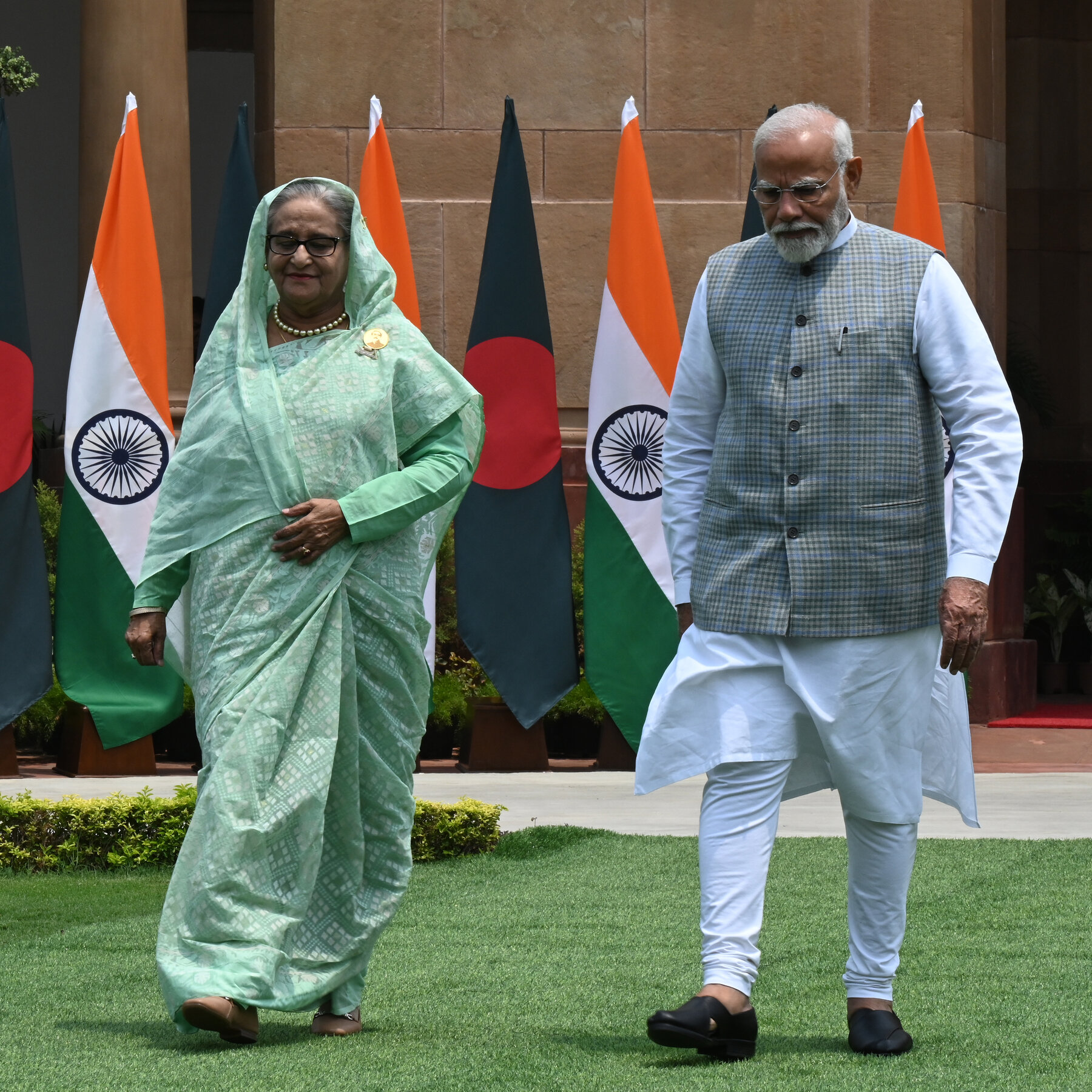
Nineteen seventy-one stands as a rare instance of successful 20th-century interventionism, where India effectively leveraged its military and diplomatic machinery to resolve a mounting humanitarian crisis through the creation of a sovereign Bangladesh. For over five decades, the bond between the two nations was touted as a unique model of post-colonial cooperation. However, as 2024 gives way to the closing months of 2025, that ‘Special Relationship’ has fractured. The current landscape in Bangladesh represents more than a mere change in government; it signifies a systematic dismantling of bilateral trust and a direct threat to India’s internal security. The ‘Golden Chapter’ is being forcibly closed, replaced by an era of strategic hostility that threatens to return the region to the volatile dynamics of the 1990s.
A Defining Historical Pivot
The fall of the Awami League government in August 2024 served as a watershed moment. While India maintained that its relationship was with the nation rather than a specific party, the aftermath of the transition suggests a deeper rift. Since the interim government took charge, a virulent strain of anti-Indian sentiment has been mainstreamed, often with the tacit approval of the new authorities. The protests of December 2025, sparked by the death of youth leader Sharif Osman Hadi, have morphed into a state-sanctioned grievance against India. For New Delhi, the crisis has transcended diplomatic friction to become a matter of urgent humanitarian concern. The brutal lynching of Dipu Chandra Das—a Hindu man killed by a mob in Mymensingh under allegations of blasphemy—ignited a firestorm of public indignation within India. This incident, widely circulated on social media, has placed immense pressure on the Indian government to address the deteriorating security of minorities. Simultaneously, targeted attacks on Indian consulates in Chittagong and Rajshahi were perceived in New Delhi not as ‘organic’ unrest, but as a systematic failure of the host state to uphold the Vienna Convention.
The Minority Question: A Moral and Political Crisis
One of the most distressing developments of 2025 has been the systemic targeting of the Hindu minority. Reports of temple desecrations and land grabbing have crossed a threshold that New Delhi cannot ignore. While the interim administration in Dhaka dismisses these reports as ‘exaggerated’ or ‘Indian propaganda,’ the ground reality documented by international observers tells a different story. For India, this is not merely a communal issue; it is a matter of regional stability. A large-scale exodus of minorities into India’s border states would trigger a demographic and social crisis that New Delhi is determined to prevent.
The Architecture of Friction
To understand why the relationship is at a breaking point, one must examine the structural grievances that have been allowed to fester.
1. The Hydrological Trust Deficit: Water sharing remains the Achilles' heel of this partnership. While the Farakka Barrage is a historical grievance in Dhaka, from the Indian perspective, the management of the Ganges is vital for the survival of the Kolkata port and millions of farmers in West Bengal. The stalled Teesta River treaty is often cited as an Indian ‘failure,’ yet in New Delhi, this is viewed through the lens of federalism—a domestic democratic constraint that Dhaka portrays as ‘hydrological aggression.’ During the 2024 floods, the ‘water weapon’ narrative—the baseless claim that India opened dams to intentionally flood Bangladesh—demonstrated how effectively misinformation can be weaponized.
2. The Border Paradox: India shares its longest international border—4,096 km—with Bangladesh. For New Delhi, this frontier is a conduit for cattle smuggling, human trafficking, and counterfeit currency. The Border Security Force (BSF) operates under high-tension conditions to secure a porous and non-linear boundary. While Dhaka focuses on ‘border killings’, New Delhi views these incidents as the unfortunate consequence of aggressive illegal activities that threaten Indian sovereignty.
The Security Nightmare
Perhaps the ultimate ‘red line’ for India is the security of its Northeast. Under the previous regime, a clear understanding existed: Bangladesh would not allow its soil to be used by anti-India insurgents. By 2025, that guarantee has evaporated. Recent intelligence suggests that groups such as ULFA and various Naga factions are once again finding sanctuary within Bangladesh. Furthermore, the rise of extremist groups like the Ansarullah Bangla Team (ABT) poses a direct threat to the secular fabric of India’s border states. The arrest of ABT modules in Assam in late 2025 confirms India’s worst fears: that a radicalized Bangladesh may serve as a launchpad for extremism into the Indian heartland.
The Siliguri Corridor: Connectivity and Strategic Denial
The most tangible impact of the 2025 crisis is the disruption of the ‘Connect Northeast’ initiative. For years, India invested billions in transit routes through Bangladesh to bypass the narrow Siliguri Corridor. Today, that investment appears to be a strategic liability. The Agartala-Akhaura rail link and the use of Chittagong port, once envisioned as the ‘lifelines’ of the Seven Sisters, are now held hostage by political volatility. Consequently, India has accelerated the Kaladan Multi-Modal Project via Myanmar. Despite Myanmar's internal instability, New Delhi now finds it a more predictable partner than a hostile Dhaka. This represents a massive strategic shift: India is effectively ‘looking away’ from Bangladesh to secure its own territories.
The China-Pakistan Shadow
The most concerning development is the invitation of extra-regional powers into the bilateral space. The interim government’s overtures to Pakistan and the deepening of an ‘all-weather’ friendship with China are seen as deliberate attempts to dilute Indian influence. By allowing China to control key infrastructure and providing Pakistan with a diplomatic platform in Dhaka, the current administration is engaging in a dangerous balancing act that threatens to turn Bangladesh into a theater of ‘Great Power Competition’ at India’s doorstep.
A Relationship of Necessity, Not Choice
India and Bangladesh are partners forged in the crucible of 1971, but in 2025, they no longer speak the same language. The onus of restoration lies with Dhaka. New Delhi cannot be expected to provide transit, electricity, and economic concessions while its security interests are ignored and its diplomats are threatened. The ‘Golden Chapter’ may have concluded, but geography is permanent. Bangladesh remains surrounded by India on three sides. For the sake of the millions living on both sides of the Radcliffe Line, it is hoped that the current ‘Strategic Denial’ is a temporary fever rather than a permanent state of affairs. However, until Dhaka addresses New Delhi’s core security concerns—specifically regarding the Northeast and the protection of minorities—the relationship will remain in a deep, dark frost.
Sudhir S. Raval is Consulting Editor at the ITV Network
