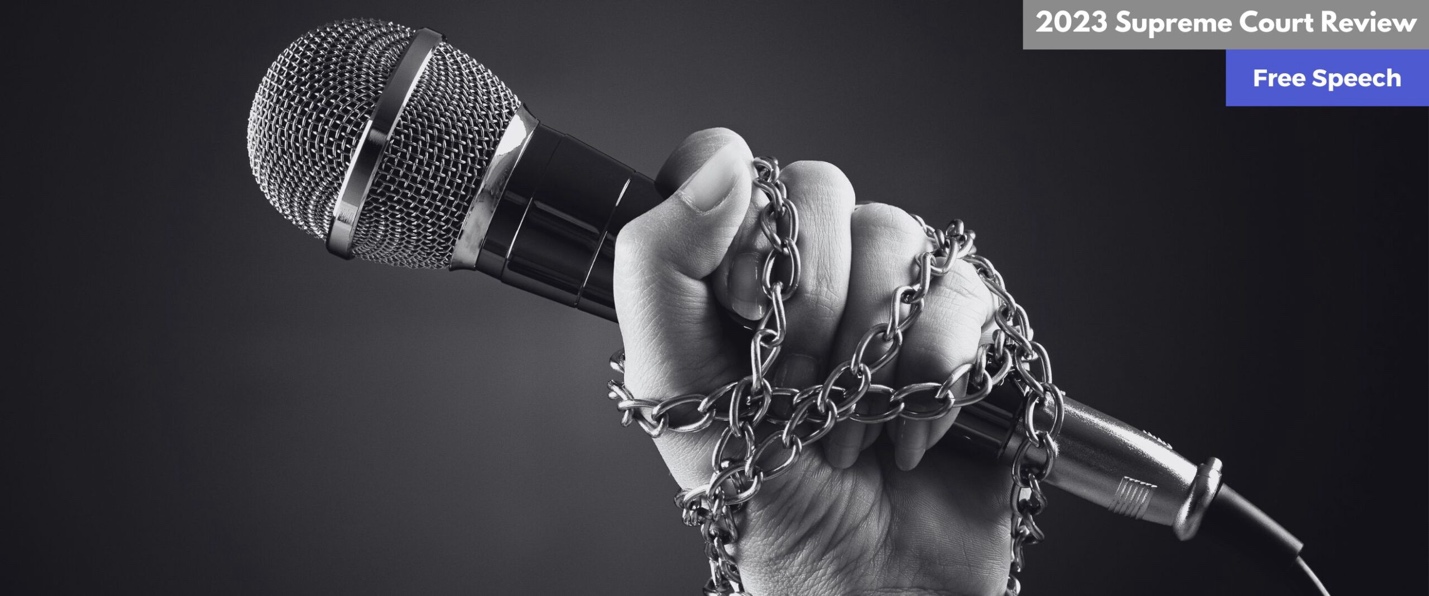
The architecture of a post-colonial democracy is rarely built on absolute ideals; rather, it is forged in the crucible of historical trauma, political contingency, and acute structural anxiety. Nowhere is this truer than in India, whose constitutional journey offers a profound masterclass in the delicate, often volatile equilibrium between individual liberty and state survival.
At the absolute center of this geopolitical and legal evolution sits Article 19(1)(a) of the Indian Constitution: the guarantee of freedom of speech and expression. For international observers and legal scholars, the story of how this right was debated, structurally altered in its infancy, and continuously renegotiated offers an essential blueprint for understanding the vulnerabilities and resilience of modern democratic systems.
The Founding Dilemma: Purists vs. Pragmatists
When the Constituent Assembly of India gathered in the late 1940s to draft a charter for a newly liberated nation, it possessed a unique intellectual composition. Unlike many Western counterparts, it was a striking intersection of elite legal minds, seasoned journalists, and committed educationists who had spent decades fighting colonial suppression. Consequently, the debate over free speech, which reached its zenith in December 1948, became a sophisticated battleground over the very definition of popular sovereignty.
The core conflict was structural. The fundamental rights sub-committee initially introduced an expansive, near-absolute right to free speech. However, the Drafting Committee, steered by the formidable jurist Dr. B.R. Ambedkar, attached a series of "provisos" that permitted the state to impose restrictions on grounds such as public morality, defamation, and the security of the state.
This fractured the assembly into two distinct ideological camps. On one side stood the liberty purists, represented by prominent figures like Professor K.T. Shah and Damodar Swarup Seth. They argued fiercely that by leaving terms like "morality" or "public order" ill-defined, the post-colonial state was simply inheriting the tyrannical tools of the British Raj. Professor Shah passionately advocated for an explicit, absolute guarantee for freedom of the press, warning that executive overreach would inevitably target political dissent. Damodar Swarup Seth famously remarked that the draft article seemed to be framed "from the point of view of a police constable" rather than a free citizenry.
On the other side stood the state pragmatists, led by Dr. B.R. Ambedkar and K.M. Munshi. These leaders were operating under the immediate shadow of the Partition of 1947, which had unleashed catastrophic communal violence and displacement. Dr. Ambedkar fundamentally rejected the notion that any constitutional right could be absolute. He argued that the state possessed an inherent right to regulate speech to protect the collective liberties of society, ensuring that one citizen's expression did not incite violence that eradicated another citizen's right to life.
A critical compromise was engineered by K.M. Munshi, a brilliant lawyer and author, who successfully moved to delete the word "sedition" from the constitutional restrictions. Munshi recognized that in a true democracy, criticizing the government must never be equated with treason. Thus, the original Constitution was enacted with a broad right, balanced against a tightly defined, narrow set of state exceptions.
The 1951 Pivot:
The idealism of 1948 collided violently with the governance realities of 1950. Almost immediately after the Constitution was adopted, a series of judicial interventions forced a historic confrontation between the executive branch and the judiciary.
Left-leaning and right-leaning publications alike began aggressively testing the boundaries of free speech. In landmark cases like Romesh Thapar v. State of Madras (where a left-wing weekly was banned) and Brij Bhushan v. State of Delhi (involving pre-censorship of a nationalist journal), the newly formed Supreme Court of India took a remarkably purist stance. The court struck down these state actions, ruling that ordinary ‘public order’ or local disturbances did not meet the high constitutional threshold of endangering the ‘security of the state.’
Prime Minister Jawaharlal Nehru’s government found itself in an administrative crisis. The judiciary’s literal, uncompromising reading of Article 19(1)(a) effectively left the administration toothless against hate speech, incitement to communal riots, and radical agrarian insurgencies.
The response was swift, controversial, and structurally transformative. In June 1951, functioning as a Provisional Parliament, the very same individuals who had drafted the Constitution passed the First Constitutional Amendment.
Rewriting the Boundaries of Expression
The First Amendment fundamentally altered the DNA of Indian free speech by completely rewriting Article 19(2). It introduced three sweeping, brand-new grounds upon which the state could legally restrict speech, creating the framework that exists today:
Public Order: This addition effectively reversed the Romesh Thapar judgment, allowing the state to restrict speech to prevent local violence, riots, or civil disruption long before it escalated into a threat to national security.
Friendly Relations with Foreign States: Driven by Nehru’s fragile, non-aligned foreign policy, this clause prevented citizens or the press from printing vitriolic critiques of foreign dignitaries or neighboring nations that could jeopardize international diplomacy.
Incitement to an Offence: This plugged a glaring legal loophole highlighted by the Patna High Court, which had previously ruled that under the original text, even an explicit incitement to murder could not be prohibited unless it directly destabilized the entire state apparatus.
To mitigate charges of totalitarianism, the government conceded a vital semantic safeguard: any restriction imposed by the legislature had to be "reasonable." This single word ensured that the judiciary remained the ultimate arbiter. The state could pass restrictive laws, but the courts retained the power to review whether those laws were proportional, fair, and genuinely necessary.
The Democratic Imperative:
The historical trajectory of Article 19(1)(a) underscores a universal truth: in a true democracy, the freedom of speech is not a secondary luxury; it is the foundational infrastructure upon which all other liberties depend.
Democratic governance relies entirely on a continuous, uninterrupted feedback loop between the state and the citizenry. When the state suppresses expression, it effectively blinds itself, severing the mechanisms of public accountability, investigative journalism, and minority dissent. Without free speech, the marketplace of ideas collapses into an echo chamber of state-sanctioned orthodoxy.
Furthermore, intellectual and scientific progress requires the right to offend, to challenge established paradigms, and to dissent from majoritarian consensus. The multi-professional composition of India's early leaders—who balanced legalism with academic and journalistic zeal—recognized that a nation's "scientific temper" cannot develop in an environment of intellectual conformity.
Global Lessons from the Indian Experiment
For the international community, India's free speech architecture offers a compelling alternative to the American model of near-categorical protection. The Indian model is one of codified proportionality. By explicitly writing the restrictions into the text of the Constitution rather than leaving them to be invented ad-hoc by judges, India attempted to create a transparent, predictable legal framework.
However, this experiment also serves as a stark warning. The ease with which the First Amendment was passed demonstrates that when the executive branch encounters judicial resistance, its instinctive reflex is to alter the constitutional architecture for administrative convenience. The expansion of terms like "public order" created a highly elastic legal vocabulary that subsequent, less well-intentioned governments could exploit to suppress political opposition and penalize journalistic scrutiny.
The enduring lesson of the Indian constitutional narrative is that the survival of free expression does not rely solely on the eloquence of a written text. Rather, it depends on the continuous vigilance of independent judiciaries to enforce the standard of "reasonableness," and an active civil society willing to defend the right to dissent. In an era of global democratic backsliding, where information ecosystems are increasingly contested, the sophisticated balances struck—and broken—in New Delhi remain deeply relevant to the fate of constitutional liberties worldwide.
Sudhir S. Raval is Consulting Editor at the ITV Network
